
MULTI-MATERIAL DISPLAY SOLUTIONS
Custom Multi-Material Displays
Custom retail displays that combine materials around structure, product presentation, finish, weight, lighting, assembly and production requirements.
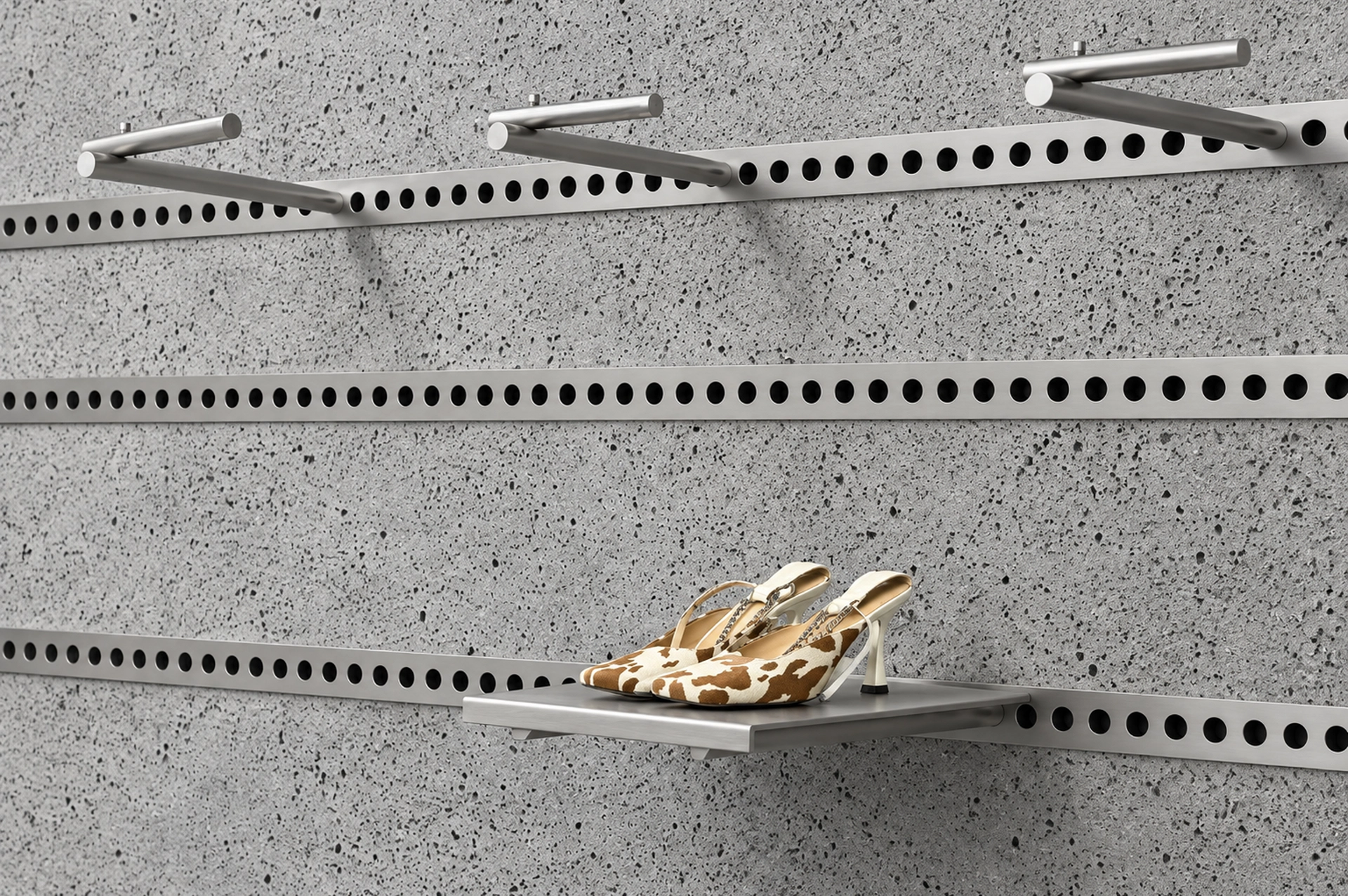
Different materials can solve different parts of the same display.
A successful combination starts with the role each material needs to serve: supporting the structure, presenting the product, creating the finish, reducing weight or integrating lighting.
Showing material combination 3 of 6.
MATERIAL ROLES
Select materials by what each part of the display needs to do.
Material choice should follow the role of each component: transparency, support, surface finish, weight, forming, lighting, product contact or assembly.
RETAIL CONTEXT
Material combinations shaped around product and retail requirements.
Different product categories place different demands on transparency, structure, finish, lighting, product support, durability and how the display is assembled or replenished.
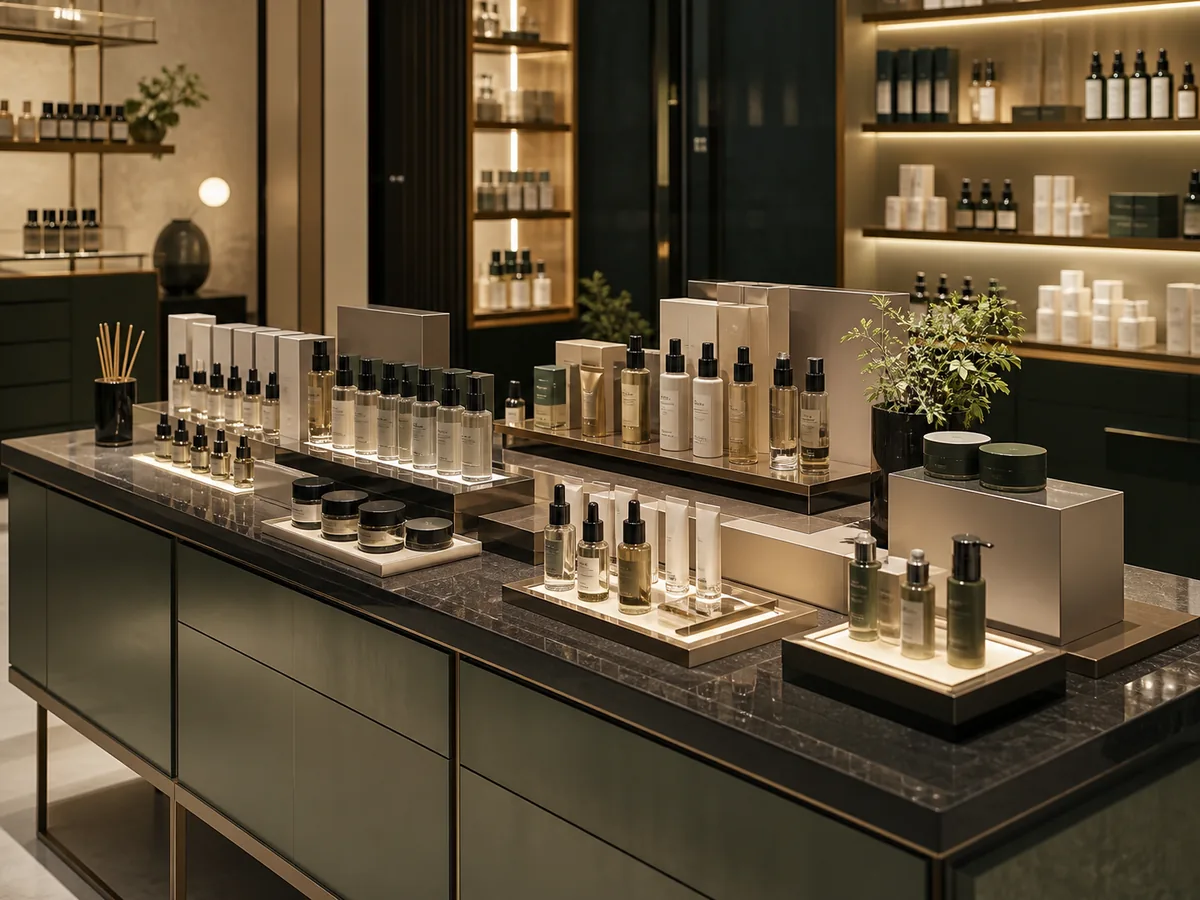 Beauty & Cosmetics
Acrylic, metal, wood finishes and lighting can be combined where transparency, premium presentation, tester access and branded surfaces need to work together.
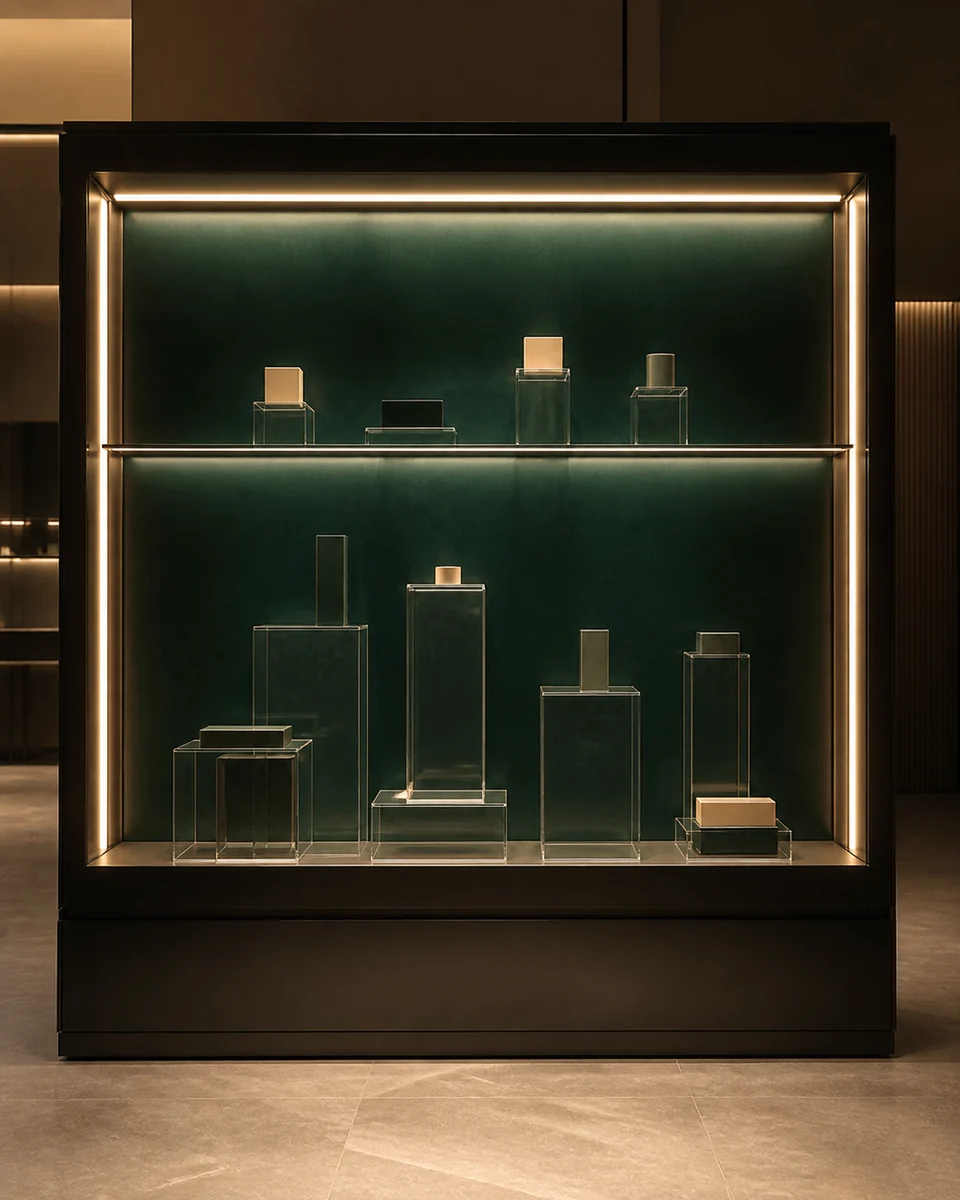 Jewelry & Watches
Clear materials, refined metal details, solid bases and controlled lighting can support premium product presentation where appropriate.
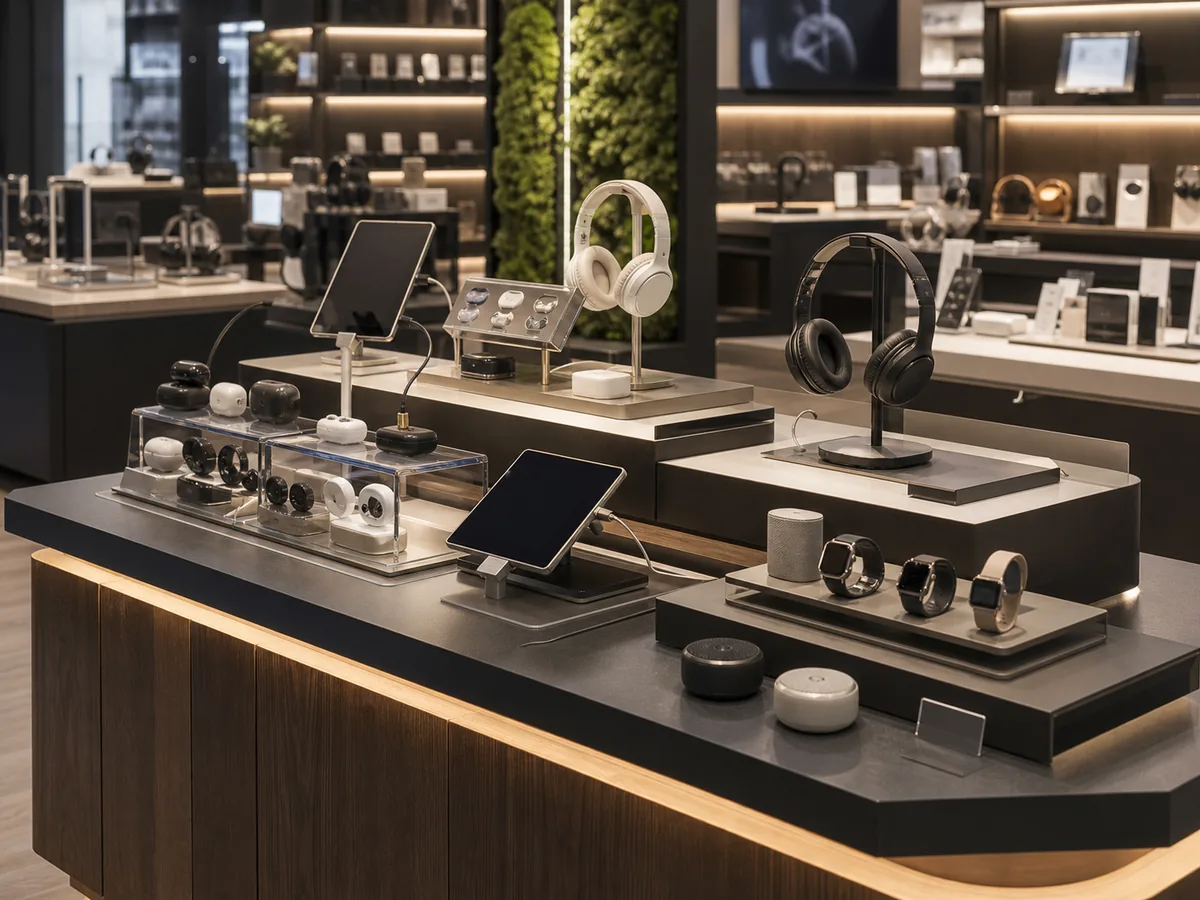 Consumer Electronics
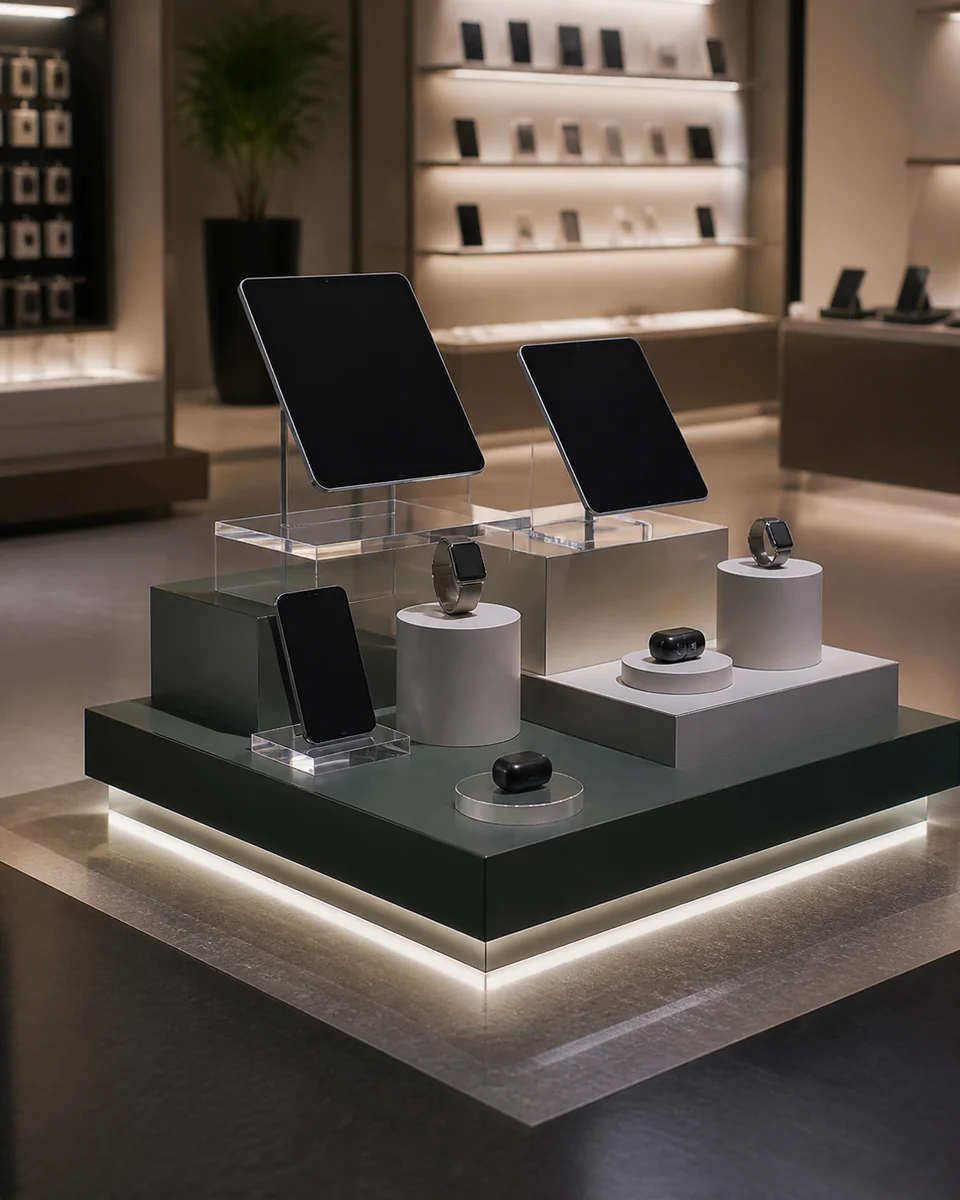
Metal structures, acrylic panels, plastics and lighting can support product positioning, cable routing, branding and demonstration requirements.
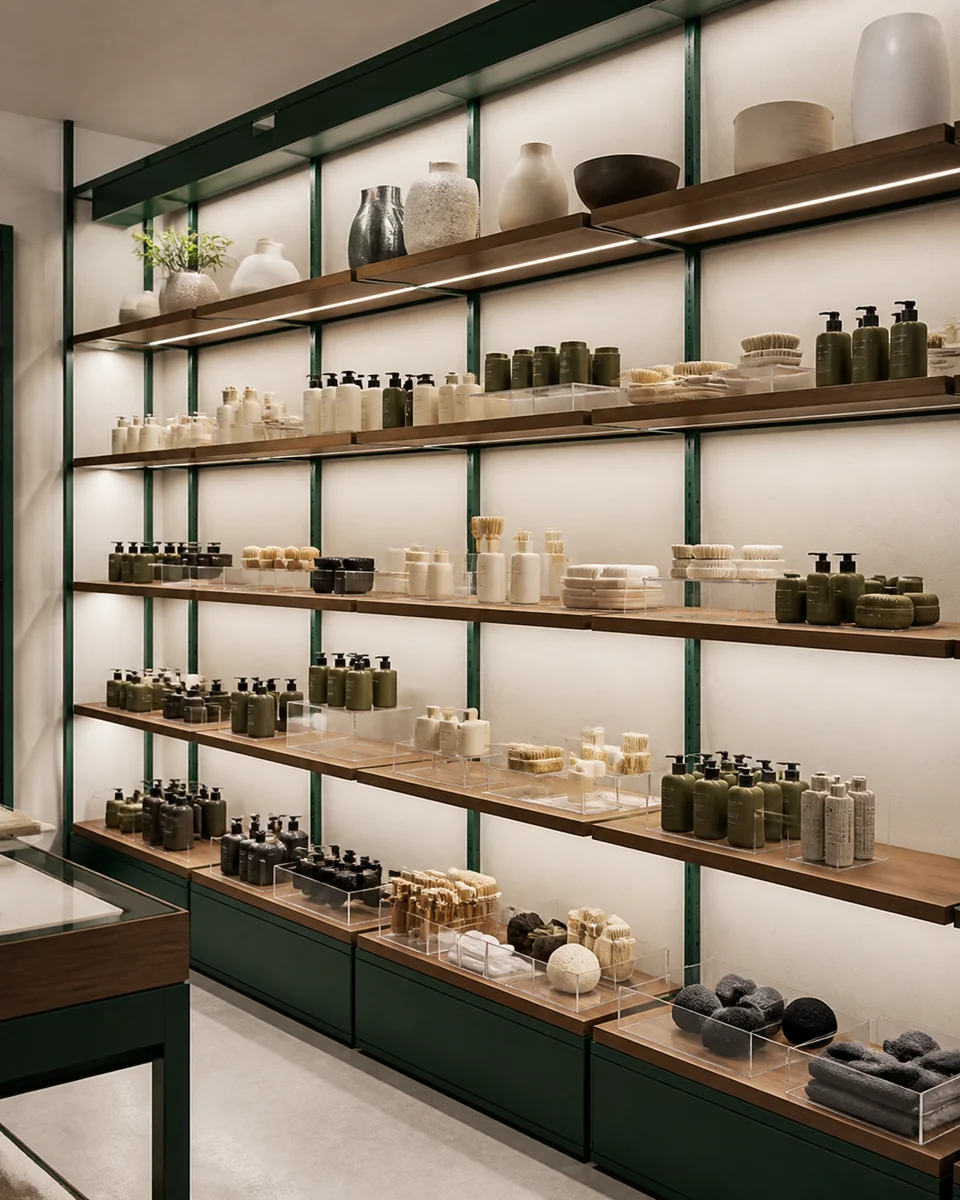 Food & Beverage
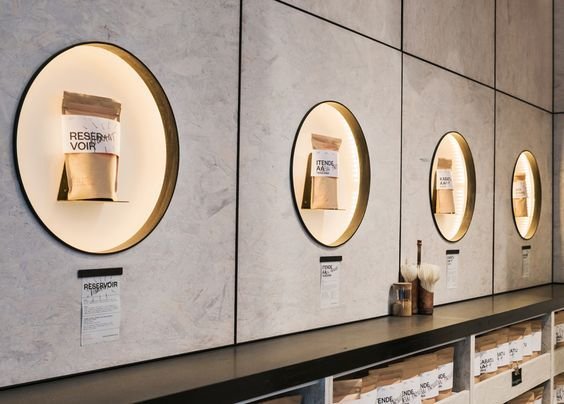
For suitable packaged products, mixed-material displays can combine practical structural components with branded surfaces and product organization.
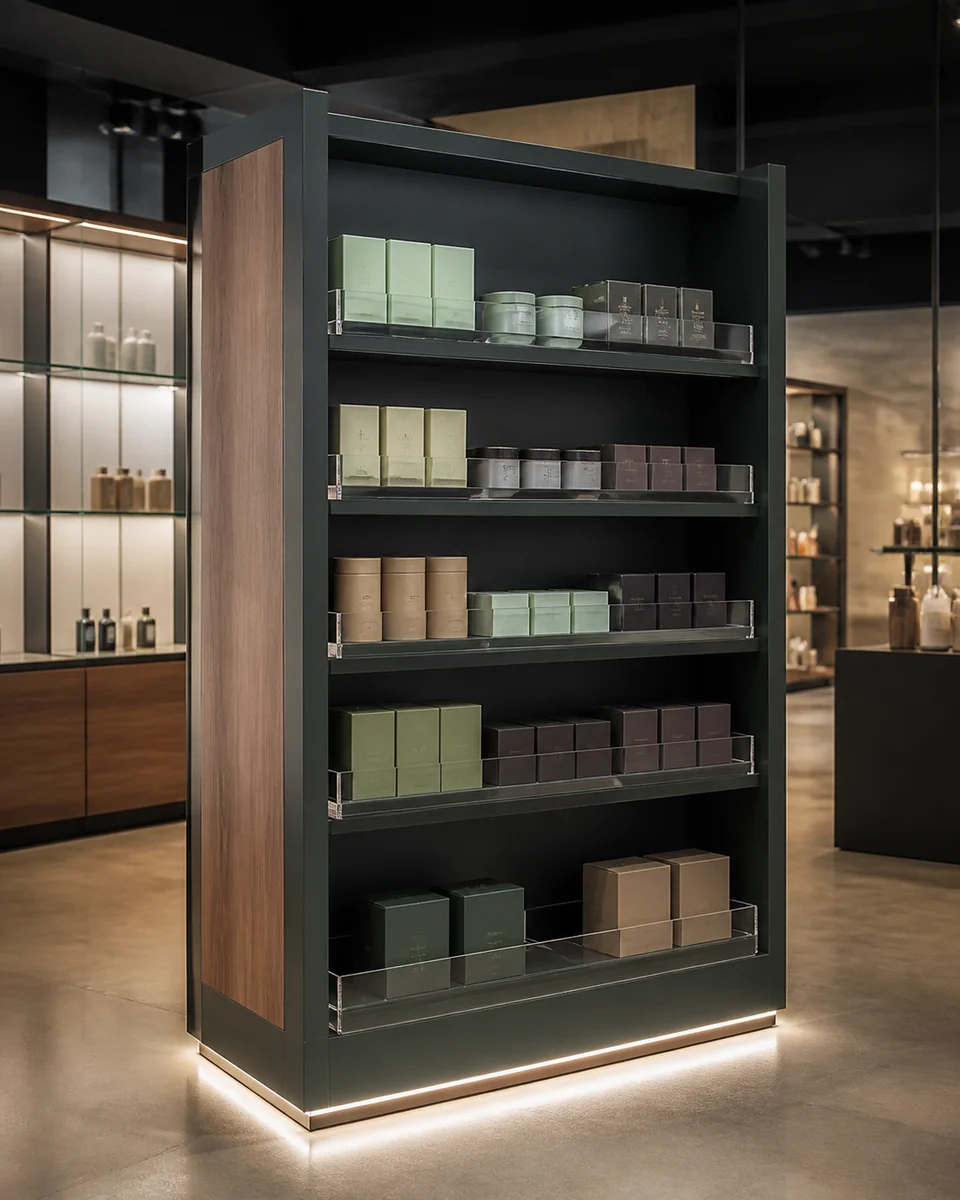 Fashion & Accessories
Metal, acrylic, wood and other suitable materials can create product stands, risers and display structures with different visual and structural roles.
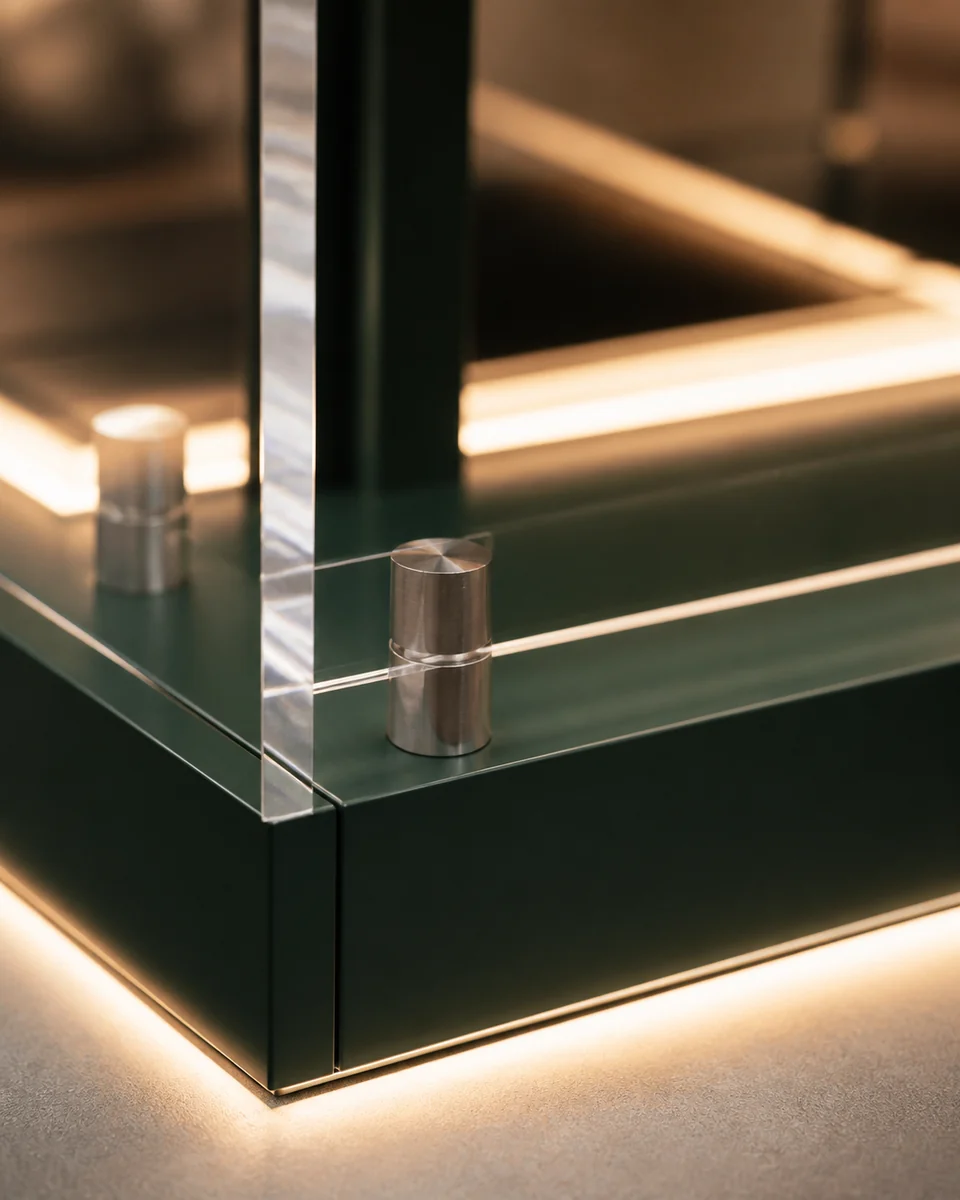 Lifestyle Retail
Wood, acrylic, metal and lighting combinations can support home, wellness, gift and specialty products where material character contributes to presentation.
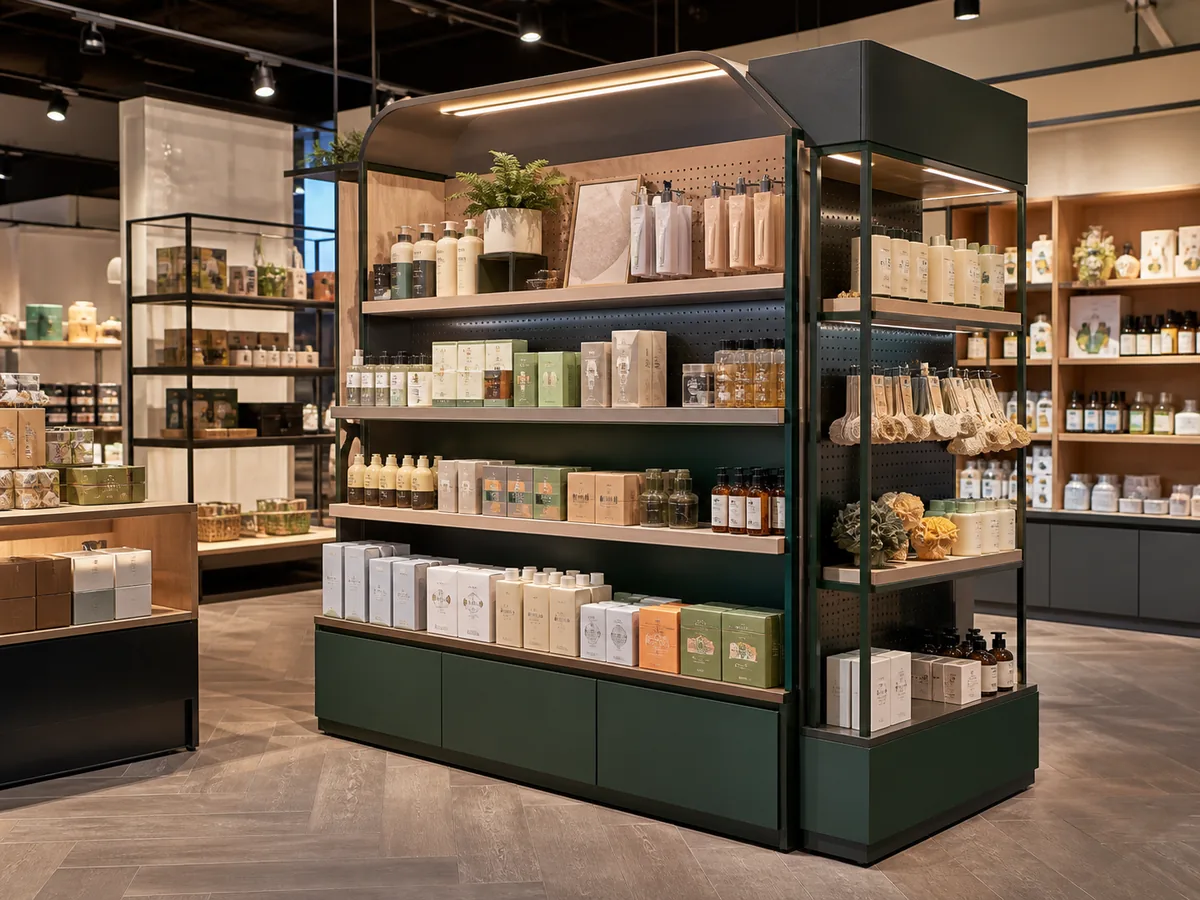 Consumer Brands
Multi-material construction can help balance brand appearance, product visibility, structure and practical production requirements.
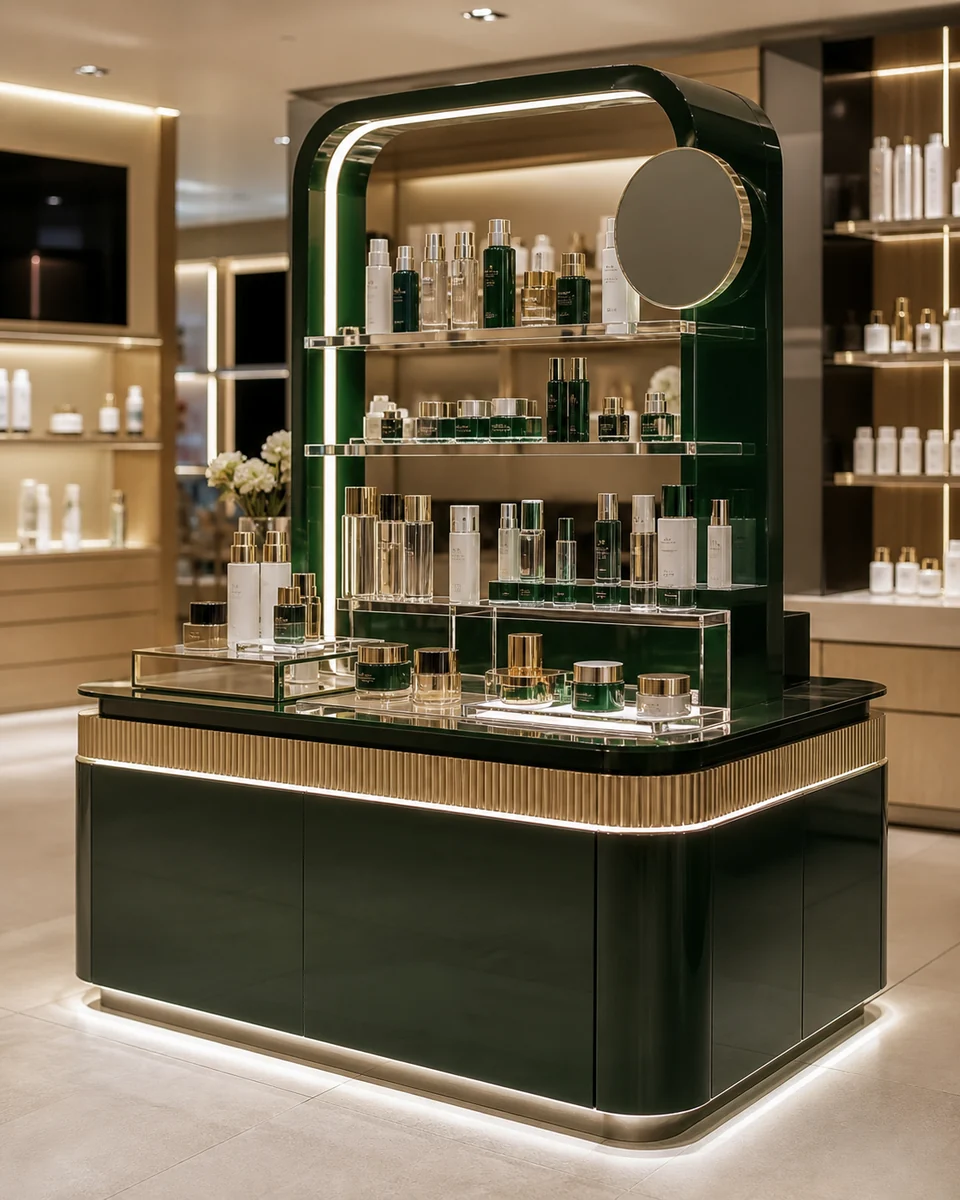 Gifts & Specialty
Mixed materials can support varied product sizes and presentation needs while creating clear visual hierarchy within a display.
Use each material where it contributes most.
Material combinations are selected around the role of each component rather than a fixed formula. Not every project needs every material, and lighting is an optional integrated element rather than a structural material.
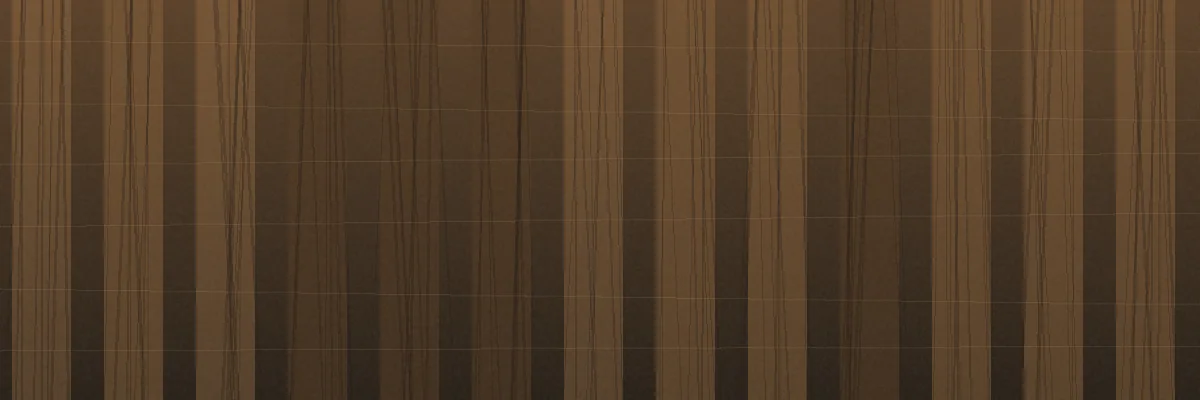
Wood & MDF
Metal
Acrylic
Glass

LED & Lighting
PVC, PETG & Other Plastics
PROCESS
From material concept to coordinated production.
Small and mid-size multi-material display projects move from product requirements through material selection, interface design, prototype validation, coordinated production, assembly and packaging.
Define What the Display Needs to Do
We begin with the product, intended placement, display size, structural needs, visual direction, target quantity and any reference material.
- Product and placement
- Structure and appearance
- Quantity and references
Assign the Right Material Roles
Materials are selected around transparency, support, thickness, finish, weight, product contact, lighting and the way different components need to work together.
- Material roles
- Appearance and structure
- Assembly direction
Engineer the Interfaces
Connections, clearances, component fit, finish transitions, assembly and prototype requirements are reviewed before production.
- Component interfaces
- Fit and assembly
- Prototype review
Coordinate Production
Approved components move through the appropriate fabrication, printing, finishing, lighting and assembly processes, with checks across the combined structure.
- Component fabrication
- Finishing and lighting
- Assembly checks
Prepare the Complete Display
Completed assemblies are reviewed and packed around material surfaces, removable components, assembly condition and final shipment requirements.
- Final assembly review
- Surface protection
- Packaging and shipment preparation
ENGINEERING + PRODUCTION
Engineering the interfaces between different materials.
A multi-material display depends on how components connect, align, finish and assemble, not simply on selecting attractive materials.
Material Selection& Roles
ComponentInterfaces
Fit &Assembly
Prototyping &Sampling
Fabrication &Finishing
Quality &Packaging
QUALITY CONTROL
Checks focused on interfaces, finish consistency and final assembly.
Depending on the project, reviews can cover material appearance, component dimensions, fit between parts, finish transitions, assembly, lighting and packaging before shipment.
- Material Verification
- Component Fit Check
- Interface & Assembly Check
- First Article Review
- Finish & Appearance Check
- Packaging & Pre-Shipment Review
DISPLAY EXAMPLES
Multi-material display directions for different structural and visual needs.
The right combination depends on what the display needs to support, reveal, illuminate, assemble and communicate around the product.
DISPLAY DIRECTION
Acrylic + Metal Display Direction
A display direction combining clear product visibility with slim structural support and coordinated finishes.
DISPLAY DIRECTION
Wood + Acrylic Display Direction
A direction combining solid body or surface panels with transparent product presentation.
DISPLAY DIRECTION
Illuminated Mixed-Material Display
A direction coordinating structural components, transparent surfaces and optional lighting around the product.
DISPLAY DIRECTION
Metal-Frame Product Display
A product-display direction using a metal frame with suitable panels, branded surfaces and assembly points.
DISPLAY DIRECTION
Clear Cover + Solid Base Direction
A direction combining a transparent cover with a solid base selected around access, presentation and assembly needs.
DISPLAY DIRECTION
Mixed-Material Product Stand
A stand direction assigning different materials to product contact, structural support and visible finish areas.
Showing display direction 2 of 6.
Questions about custom multi-material displays.
What is a multi-material retail display?
A multi-material display combines two or more materials within one display so that different components can serve different structural, visual or functional roles.
Does every custom display need multiple materials?
No. Material choice should follow the project. A simple single-material display may be the better solution when additional materials do not improve the structure, appearance or production approach.
What materials can be combined?
Depending on the project, combinations can include acrylic, metal, wood or MDF, suitable plastics, glass and integrated lighting.
How do you decide which material to use for each component?
The decision can consider transparency, structural support, product weight, finish, geometry, assembly, lighting, production method, packaging and cost requirements.
Why are material interfaces important?
Different materials can require different connection methods, clearances and finishing processes. Reviewing how components meet and assemble helps reduce fit and appearance issues during production.
Can lighting be integrated into a multi-material display?
Yes. Depending on the project, LED lighting can be integrated into bases, panels, edges or other components where illumination supports the product or brand presentation.
Can the display be designed for disassembly?
Depending on the structure, removable or knock-down components can be considered where they help with assembly, packing, shipping or later replacement.
Why is prototyping useful for multi-material displays?
A prototype can help review how different materials fit together, how the complete structure assembles, how finishes interact and whether the display performs as intended before larger production quantities are finalized.
Can different surface finishes be coordinated?
Yes. Finish direction can be reviewed across materials so that painted, printed, polished, brushed, transparent or other suitable surfaces work together visually.
START A PROJECT
Planning a display that needs more than one material ?
Share your product details, display concept, approximate size, target quantity, material preferences, drawings or reference images. We'll review how the components and materials can work together.