
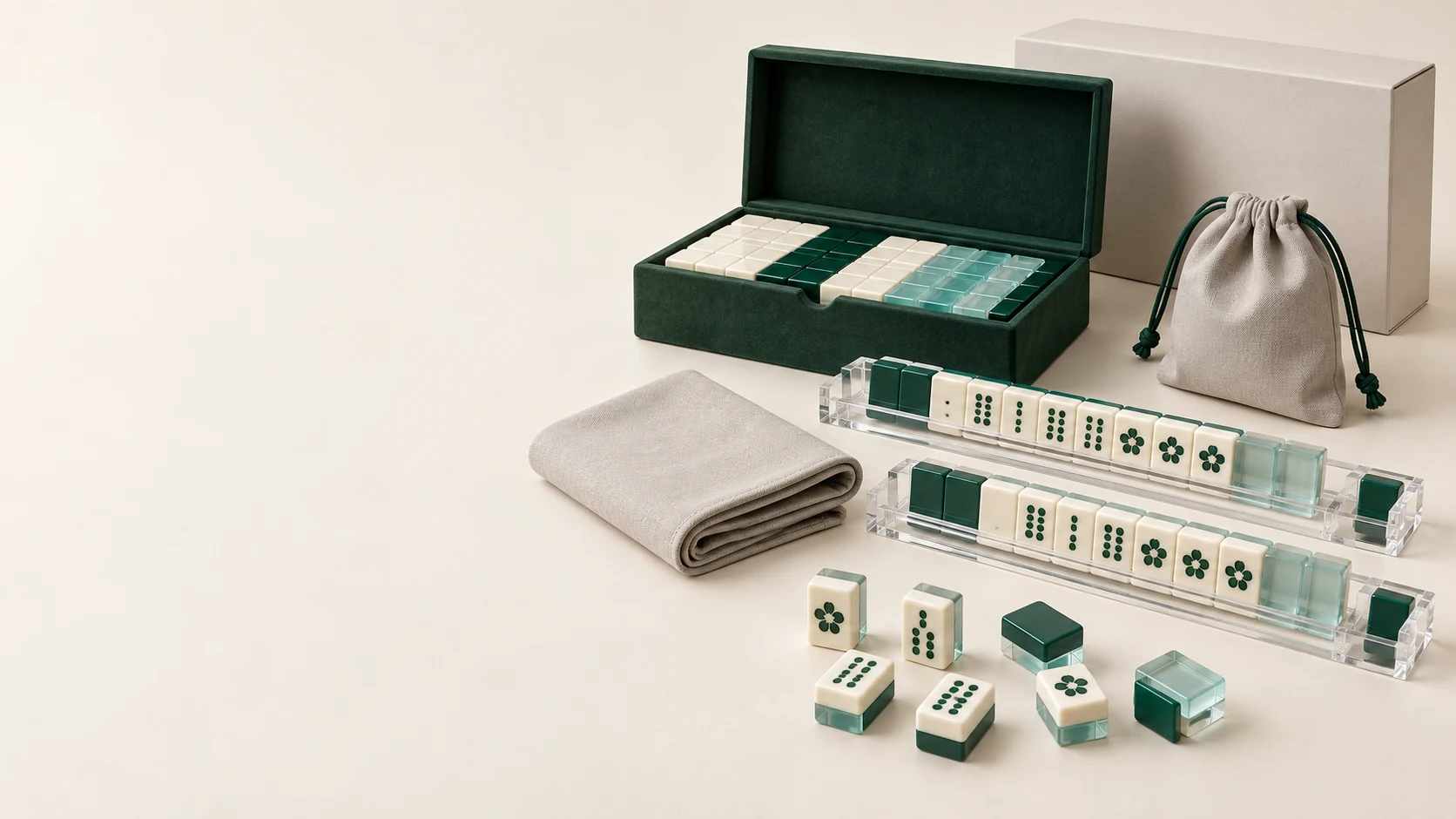
CUSTOM ACRYLIC MAHJONG
Custom Acrylic Mahjong Sets
Custom acrylic mahjong sets developed for brands, retailers, private-label programs and wholesale buyers, with tile artwork, colors, accessories and packaging defined around your project.
For mahjong brands, retailers, importers and distributors, DTC and marketplace sellers, clubs, hospitality and premium gifting programs.
START HERE
Define the set before you define the order.
A useful mahjong brief starts with the tile set itself, then adds the accessories and approval steps needed for the final retail product.
01
DEFINE THE TILES
Confirm the game format, tile count, dimensions, construction, colors and face style.
02
BUILD THE SET
Add racks, pushers, mats, storage or packaging only where the product program needs them.
03
APPROVE BEFORE PRODUCTION
Review the artwork, proof and physical sample before the production specification is released.
TILE CONFIGURATION
Build the tile specification step by step.
The tile body, construction, color and artwork should be defined together because each decision affects how the finished set looks, feels and fits with its accessories.
Game Format & Tile Count
Game Format & Tile Count
Start with the intended game and market. American Mahjong / Mah Jongg, traditional Chinese sets and other buyer-defined configurations can require different tile manifests and accessory planning.
Final tile count is confirmed for the specific project.
Tile Size
Tile Size
Tile dimensions affect readability, hand feel, rack fit, storage and packed weight. If an existing product or rack must be matched, provide actual measurements or a physical reference.
Layer Construction
Layer Construction
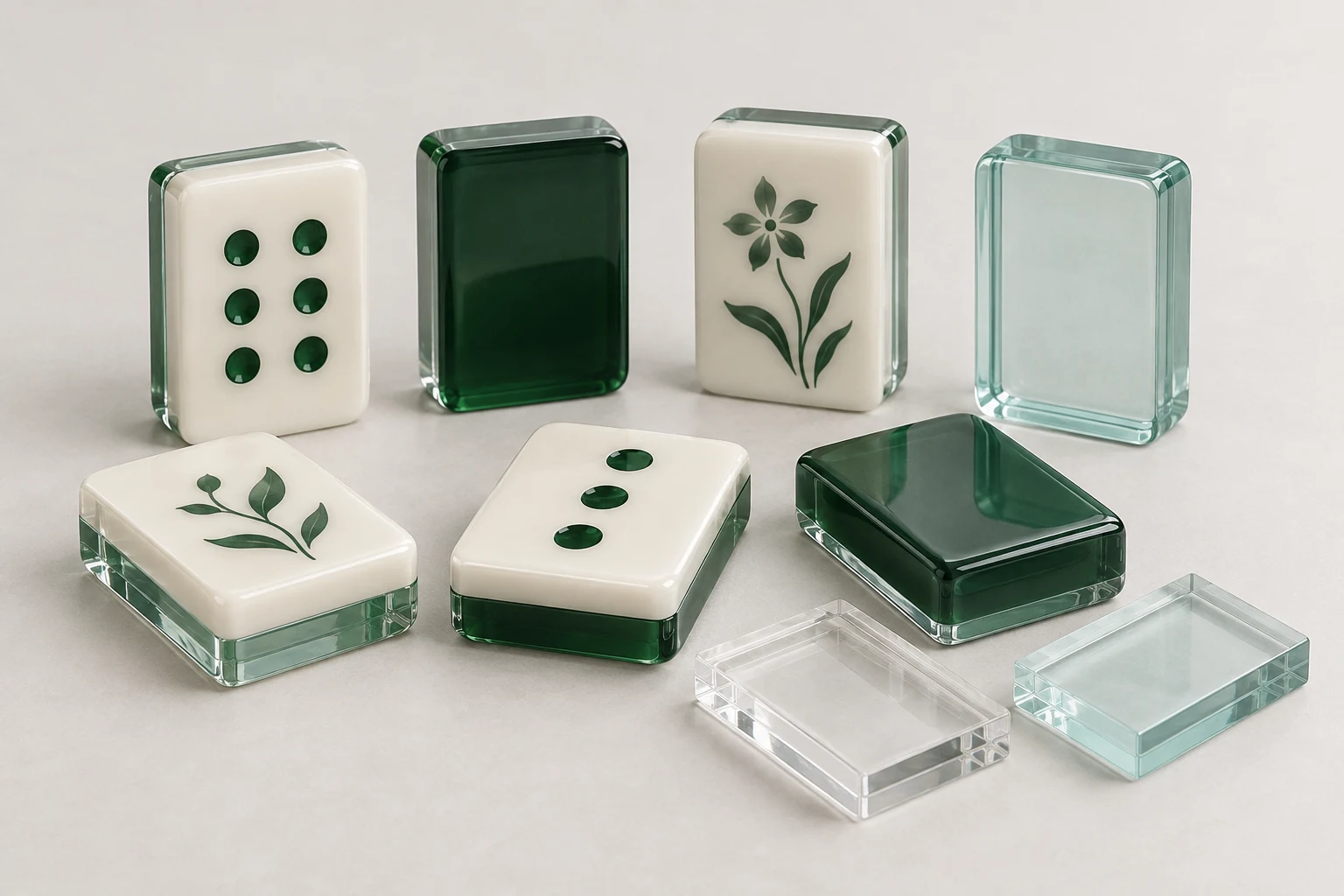
Acrylic tiles can use different visual construction concepts where the approved material and production method allow it. Confirm the final layer build and total thickness before sampling.
Body & Back Colors
Body & Back Colors
Body, core and back colors can be developed around the intended product palette and available acrylic options. Approve critical color decisions against the physical sample rather than the screen alone.
Face Artwork
Face Artwork
Custom symbols, numerals, jokers, flowers and other buyer-provided artwork can be reviewed against the selected production method and project specification.
Tile Back Artwork
Tile Back Artwork
The tile back can be considered for a logo, pattern, color or another approved visual treatment as part of the complete design.
Edge & Surface Finish
Edge & Surface Finish
Edge treatment and surface finish affect appearance and handling feel. Review these details on the approved physical sample.
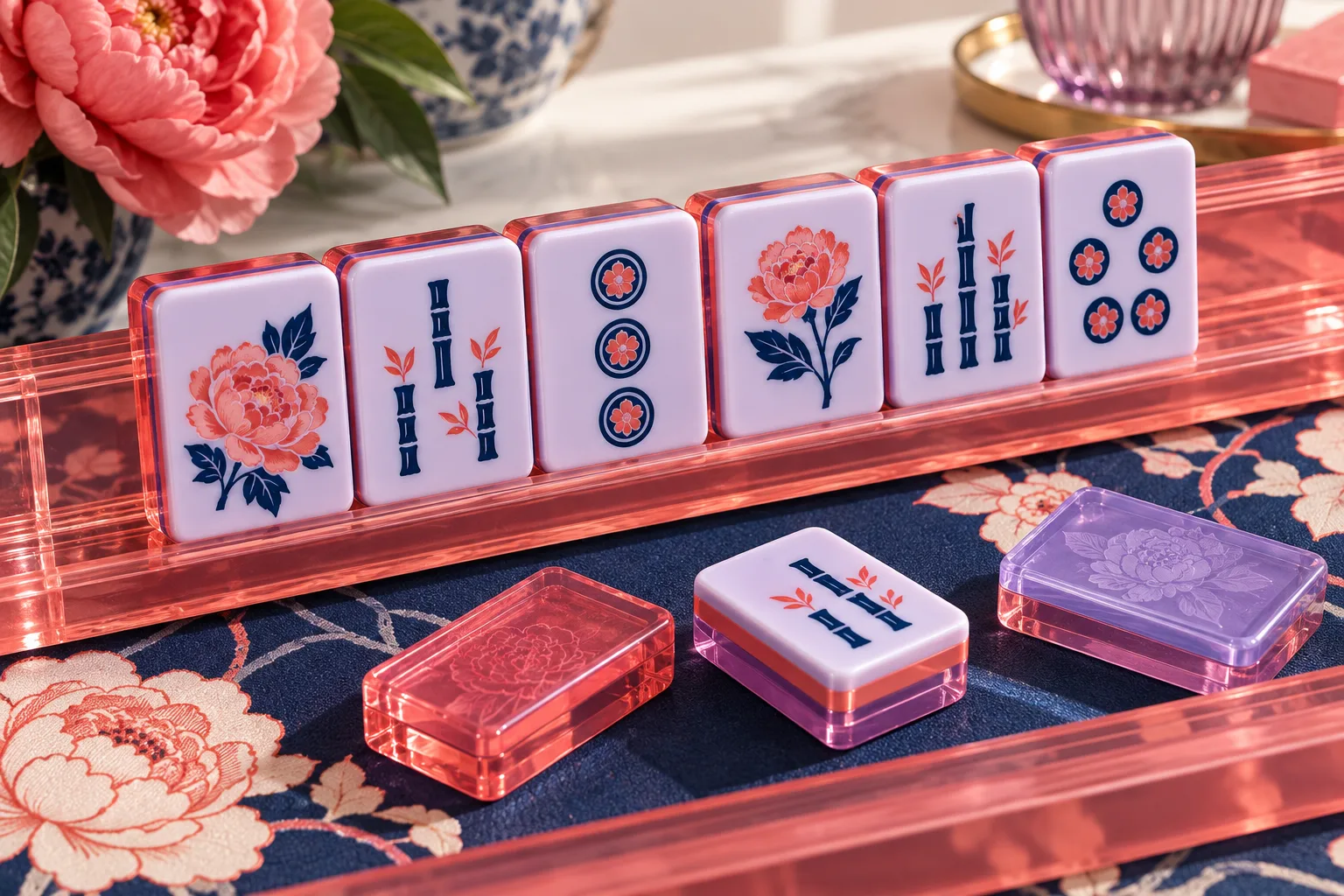
FACE & FINISH OPTIONS
Choose the face process around the artwork and the finish you want to approve.
Different marking methods create different surface appearance, detail and tactile results. The selected route should be confirmed through the production specification and physical sample.
PROCESS CATEGORY
Printed Face
BEST FOR
Use this route when a printed appearance is part of the brief.
CHECK ON SAMPLE
Check artwork placement, color appearance and surface feel on the physical sample.
PROCESS CATEGORY
Engraved Face
BEST FOR
Consider this category when the design calls for recessed face marks.
CHECK ON SAMPLE
Check symbol clarity, edge detail and handling feel on the physical sample.
PROCESS CATEGORY
Engraved + Filled Face
BEST FOR
Consider this category when the brief requests color within engraved details.
CHECK ON SAMPLE
Check fill appearance, color and consistency against the approved reference.
Process labels describe possible categories, not confirmed TC production routes. Available methods are confirmed against the artwork and project specification. All images on this page are development illustrations, not manufacturing evidence.
COMPLETE SET
Plan the accessories and packaging around the tiles.
A retail-ready mahjong product may include more than the tile set. Define the components early so dimensions, fit, color, sampling and packing can be reviewed together.
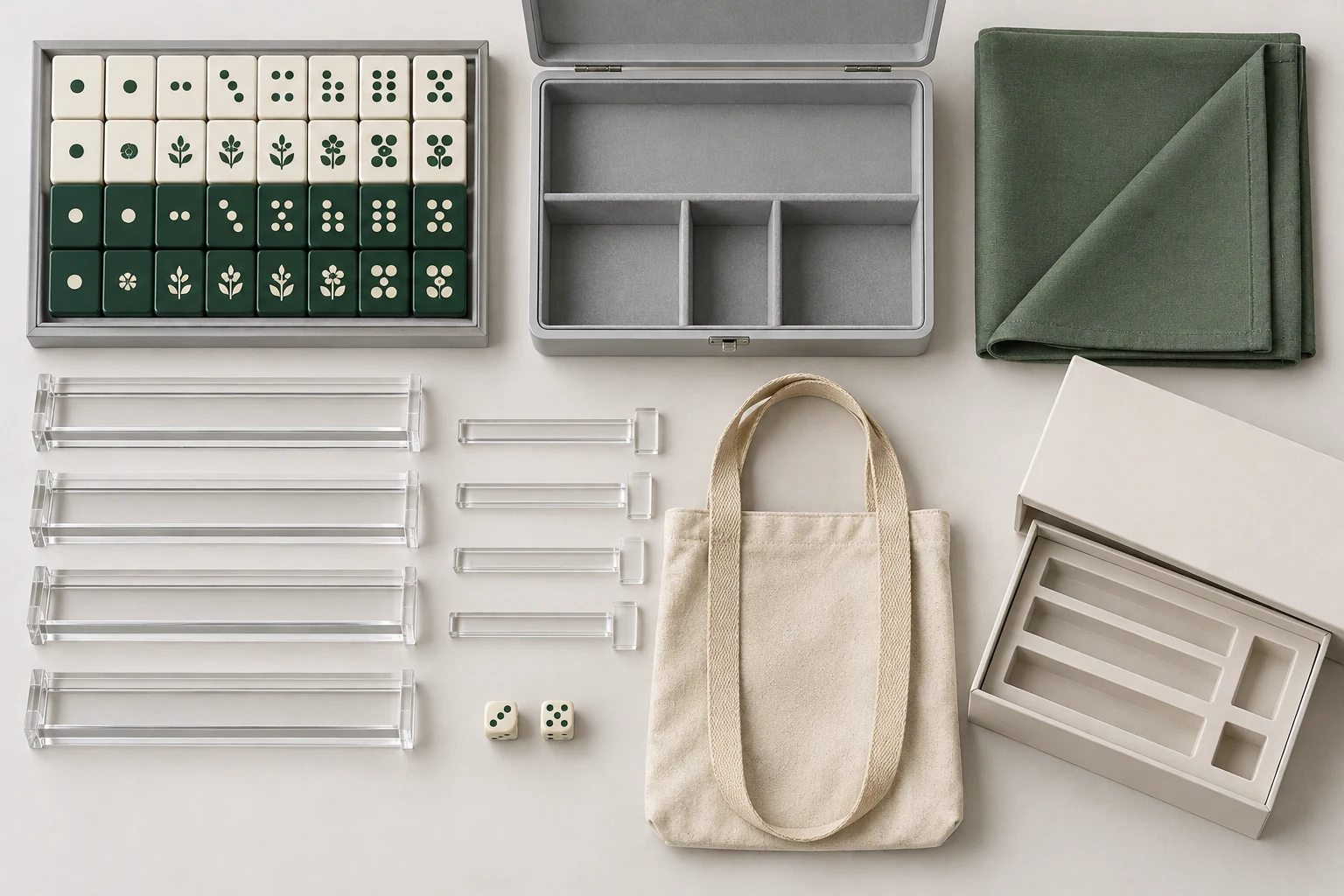
Racks & Pushers
Check usable length and loaded clearance against the selected tile size.
Playing Mat
Define the play area, artwork and packed dimensions.
Case / Storage
Set internal dimensions around the complete tile configuration.
Bag / Pouch
Confirm what it needs to carry and how it closes.
Cards & Play References
Separate tile-mixing cards from rules and play references.
Instructions & Inserts
Coordinate language, content and placement with the set.
Dice & Small Extras
List the exact small components included in each boxed set.
Retail Packaging
Specify contents, protection, presentation and destination.
Packaging questions
What goes inside?
List tiles, racks, pushers, dice and any separately ordered items by set.
How are the components positioned?
Map the order and orientation, then confirm fit with a sample or packout proof.
What protects the acrylic surfaces?
Specify separation, wrapping and any no-contact areas for review.
Is this export packaging or retail packaging?
State whether packing is for transit, shelf-ready presentation, or both; confirm the final scope per project.
Accessory availability, minimums and sourcing methods are confirmed per project. Some components may use different production processes or supply partners.
APPROVAL PATH
Approve the design on screen, then approve the product in hand.
Artwork approval and physical sample approval solve different problems. Clarify both before the production specification is released.
01
PROJECT BRIEF
Tile format, dimensions, quantity, artwork status, accessories and packaging.
02
ARTWORK REVIEW
Review placement, colors, tile inventory and the process route proposed for the project.
03
DIGITAL PROOF
Confirm the agreed layout, dimensions and visual direction before sample review.
04
PHYSICAL SAMPLE
When sampling is included, review color, finish, edges, handling, accessory fit and packaging direction.
The physical sample becomes the practical reference for details that cannot be judged reliably from a screen.
What to prepare for artwork review
Vector artwork where available; outlined fonts where required; color references; one clear inventory of unique tile faces; tile-back artwork; logo files; accessory or packaging artwork where applicable.
If file-format requirements are not yet confirmed, send the available source files and ask which format is needed before final handoff.
PRODUCTION & QUALITY
From approved sample to production-ready sets.
Once the sample and project specification are approved, the production route is coordinated around the selected tile construction, artwork process, accessories and packaging.
Prepare the Tile Body
Prepare the Tile Body
Set the agreed dimensions, construction concept and color direction against the project specification. Review the material and visible build on the approved sample.
Apply the Face Process
Apply the Face Process
Use the method confirmed for the project. Check symbol clarity, artwork placement and face appearance against the approved proof and sample.
Finish the Tile
Finish the Tile
Review surface, edge and visible layer details against the approved reference. Judge final appearance from the physical sample, not screen color alone.
Inspect the Set
Inspect the Set
Compare tile count and set completeness, dimensions, artwork placement, color and finish with the agreed specification. Check included accessory fit where relevant.
Pack the Complete Order
Pack the Complete Order
Confirm component positions, surface protection, box contents and the agreed export or retail packout before the order is released.
QUOTE CHECKLIST
Turn your idea into a quote-ready brief.
You do not need every detail finalized, but these inputs help define the product and identify the decisions still open.
01
Mahjong format / tile count
02
Tile dimensions
03
Construction / color direction
04
Face artwork / process preference
05
Quantity per design
06
Accessories
07
Packaging
08
Destination
09
Target timing
QUESTIONS & ANSWERS
Before you start a custom mahjong project.
What types of acrylic mahjong sets can be customized?
Projects can be developed around American Mahjong / Mah Jongg, traditional Chinese-style configurations or other buyer-defined set specifications. The final tile count, artwork, size, accessories and packaging should be confirmed for each project.
Can you develop custom American Mahjong or Mah Jongg tiles?
Yes, American Mahjong-style projects can be reviewed around the required tile composition, English-readable artwork, jokers, flowers, brand graphics and complete-set requirements. The final boxed tile count should be defined before sampling.
What tile count should I specify for an American Mahjong set?
American Mahjong projects commonly use different boxed counts depending on the target market and replacement-tile strategy. Counts such as 152, 160 and 166 are common buyer references, but the exact configuration should be confirmed for the individual product program.
Can I use my own artwork, logo and tile design?
Yes. Buyer-provided artwork, logos, color references and tile concepts can be reviewed for production. Vector artwork is preferred when available for final production files, while reference images can be used to begin the discussion.
Can tile colors, backs and acrylic construction be customized?
Color direction, tile backs and suitable acrylic construction options can be reviewed around the intended design and available production methods. Final materials and construction should be confirmed through the project specification and sample.
Can racks, pushers, cases and other accessories be included?
Yes, complete-set projects can include accessories such as racks, pushers, cases, bags, mats or other components where required. The production or sourcing approach depends on the specific accessory and customization level.
Can the retail packaging be customized?
Packaging requirements can be developed around the product, brand and target retail presentation. Box structure, inserts, printed materials and protective packing should be reviewed as part of the complete project specification.
Can I order a prototype before bulk production?
Sampling can be used to review tile appearance, artwork execution, dimensions, finish, accessory fit and packaging direction before the bulk specification is finalized. The sample scope depends on the level of customization.
What affects the cost of a custom acrylic mahjong set?
Cost can be influenced by tile count, tile size, acrylic construction, artwork process, color requirements, quantity, accessories, packaging and the amount of custom development required. A clear project brief makes the first quotation more useful.
What information should I send for an initial mahjong quote?
Useful information includes the mahjong format, target tile count and dimensions, expected quantity, artwork or reference images, color direction, required accessories, packaging needs, destination country and target timing.
START A PROJECT
Ready to define your custom mahjong set?
Share the format, quantity, artwork status, tile direction, accessories and packaging requirements you already know. We’ll review the open decisions and help define the next practical step.